Showing posts with label Overview. Show all posts

Sunday, October 01, 2006

China aims to become world's leading tourist destination

China, already the world'sfifth most popular tourist destination, plans to be the global leader by 2020.

Sun Gang, deputy-director of the China National Tourism Administration, made the remarks here to Asian tourism industry professionals in the Boao Forum for Asia -- Tourism Conference, which just concluded in this scenic tourist spot in southwest China's Guangxi Zhuang Autonomous Region

"China's current ranking in world tourism demonstrates its status as a major tourism destination," Sun said. "The developmentof China's tourism industry constitutes an important part in the country's process of building a well-off society."

According to information from China's State Administration of Statistics, overseas tourist arrivals in 2001 totaled 89.01 million, a rise of 6.7 percent over the previous year. Travelers staying longer than one night reached 33.16 million, the fifth largest number in the world.

The overseas tourists brought 17.79 billion US dollars to the region, a yearly increase of 9.7 percent, making China the fifth largest earner of foreign currency from tourism for the first time.

In the first nine months of this year, China received 28.12 million travelers, up 14.8 percent from the same period last year.

Chinese tourism professionals believed these results are both the start-up points and a solid foundation for China to build itself as a world-class tourism destination.

China's tourist infrastructure construction development and management have seen all-round improvement during the past 20 years. The latest statistics show that by the end of 2001, China had put 780 billion yuan into tourism fixed assets investment and had 288,000 tourism enterprises, 274,000 hotels and inns, and morethan 10,000 travel services.

China has issued 17 sets of tourism industry standards, achieving fruitful results in tourism standardization.

All these efforts put China's tourism on an international level.   

Tourism has become a new niche of growth for the Chinese economy. The total tourism related income brings an average annual growth of 12 percent, or five percentage points higher than the GDP growth of the same period. China's tourism earns 499.5 billion yuan, or 5.2 percent of China's GDP. The foreign currency earning is expected to hit 20 billion US dollars. China is expected to earn 30 billion US dollars from tourism in five years.

The holiday economy, initiated by China, has become a booster of China's tourism industry. Last year in the three "seven-day vacations" for the Chinese New Year, May Day and National Day, China's domestic travelers reached 200 million. The tourist incomeduring these periods was 73.6 billion yuan. The holiday tourism gave an injection into the accommodation, transportation, shopping and catering industries, generating shopping sprees and driving the domestic demand.

"Out-bound traveling has become a must for the Chinese people in their well-to-do life," Sun said.

The industry also played an active role in promoting the sustained economic, social and environmental development, job creation and poverty alleviation.

"China is one of the first countries in the world to eradicate poverty through tourism development," said Wu Bihu, a doctor with the Beijing University Tourism Development and Planning Research Center. "Thanks to the development of tourism and related industries, a great number of people in such poverty-stricken areas as Yunnan and Guangxi finally solved the problem of feeding and clothing themselves."

Experts estimate that the labor-intensive tourism industry has created 35 million direct or indirect job opportunities in the past 10 years in China.

More importantly, China's tourism has become an integral part of world tourism. According to the estimation of the World Tourism Organization (WTO), China will become the world's largest host country and the fourth largest to send tourists abroad by 2020.

In this year alone, according to the WTO, about 10 million Chinese will spend 18 billion US dollars traveling to other Asian destinations. In the year 2020, Chinese outbound travelers are expected to reach 100 million, a figure equal to the outbound travelers of all other Asian destinations combined.

China still lags behind the current world-class tourist destinations, such as Britain, France and the United States, Sun said, adding that the development of its rich tourism resources, the management of tourism enterprises and promotion still remain low.

"There is still a long period of time before 2020, and I believe the current gap will be gradually narrowed," he said. Enditem

Brief Introduction to China

Location The People Republic of China is situated in eastern Asia on the western shore of the Pacific Ocean, with an area of 9.6 million square kilometers. China's continental coastline extends for about 18,000 kilometers, and its vast sea surface is studded with more than 5,000 islands, of which Taiwan and Hainan are the largest.

Land Formation and Rivers China's land drops off in escarpments eastward to the ocean, letting in humid air current and leading many rivers eastward. Among the rivers totaling 220,000 kilometers in length in China, the Changjiang (Yangtze) and the Huanghe (Yellow) are world known.

China has beautiful scenery, with mountains and ranges, highlands, plains, basins, and hills. The highlands and hill regions account for 65 percent of the country's total land mass, and there are more than 2,000 lakes. The highest mountain peak is Qomolangma (Everest), the highest in the world, 8,848 meters above sea level; the lowest point is the Turpan Basin, 154 meters below sea level.

Climate

China is characterized by a continental climate. The latitude spans nearly 50 degrees. The greater part of the Chinese territory is situated in the Temperate Zone, its southern part in the tropical and subtropical zones, and its northern part near the Frigid Zone. Temperatures differ therefore rather strikingly across the country. The northern part of Heilongjiang Province has long winters but no summers; while the Hainan Island has long summers but no winters. The Huaihe River valley is marked by distinctive seasonal changes, but it is spring all year round in the south of the Yunnan-Guizhou Plateau. In the northwest hinterland, the temperature changes dramatically. China high tundra zone is situated in the Qinghai-Tibet, where the temperature is low in all four seasons. Some desert areas are dry all year round.

Resources

China abounds in natural resources. It leads the world in many proven mineral deposits; No country in the world boasts more wildlife than China, many of which are native to China, such as giant panda, snub-nosed golden monkey, and Chinese alligator; China's dawn redwood and Cathaya argyrophylla are known as the living fossils of ancient plants.

To protect the nation's native animals and plants, especially the endangered species, China has established more than 700 nature reserves. History China, with a recorded history of 5,000 years, is one of the world's earliest civilizations.

In the 21st century B.C., China entered slave society with the founding of the Xia Dynasty, thereby writing a finale to long years of primitive society. The Xia was followed by the Shang and Western Zhou Dynasty, Which encompassed the Spring and Autumn and Warring States periods.

In 221 B.C., Qin Shihuang established China's first centralized autocracy, the Qin Dynasty, thereby ushering Chinese history into feudal-ism, which endured in a succession of dynasties, such as the Han, Tang, Song, Yuan, Ming, and Qing, until the Opium War of 1840.

The economy and science and technology were relatively well developed in ancient China. During the Shang Dynasty some 3,000 years ago, the Chinese had mastered the art of bronze metallurgy, and invented iron implements; Many distinguished thinkers, scientists, artists and writers came into being. The contributions to world civilization of ancient China's four inventions: papermaking, printing, powder, and the compass, as well as remarkable achievements in mathematics, medical science, astronomy, agriculture, and architecture, are universally recognized.

The Bourgeois Democratic Revolution of 1991 led by Sun Yat-sen toppled the rule of the Qing Dynasty, put an end to more than 2.000 years of feudal monarchical system and culminated in the establishment of the provisional government of the Republic of China.

The People's Republic of China was founded on October 1,1949. Today, China is implementing reform and opening-up policies, and has established socialist market economy, thereby charting the course for socialist modernization with Chinese characteristics. Population China, as the word's most populous country, has a population exceeding 1.2 billion, which makes up 22 percent of the world total. To bring population growth under control, the country has followed a family planning policy since the 1970s.

The minority people of China

Ethnic Groups China is a multiracial country with 56 ethnic groups, including Achang, Bai, Bonan, Blang, Bouyei, Korean, Daur, Dai, De'ang, Dongxiang, Derung, Oroqen, Russian, Ewenki, Gaoshan, Gelao, Hani, Kazak, Han, Hezhen, Hui, Jino, Gin, ingpo, Kirgiz, Lahu, Li, Lisu, Lhoba, Manchu, Maonan, Mongolian, Monba, Miao, Mulam, Naxi, Nu, Primi, Qiang, Salar, She, Sui, Tajik, Tatar, Tu, Tujia, Va, Uygur, Uzbek, Xibe, Yi, Yuigur, Yao, Tibetan, and Zhuang. The Han people account for 92 percent of the population. No matter how big or small the population is, all peoples share equal rights.

Religion China is a multi-religious country. Taoism, Buddhism, lslamism, Protestantism and Catholicism have all developed quite a following in this country. Freedom of belief is a government policy, and normal religious activities are protected by the constitution.

Language and Character Chinese is commonly used in modern China. It is one of the five working languages designated by the United Nations. The majority of the 55 ethnic groups have their own languages. As a written language, Chinese has been used for 6,000 years.

Family Names Chinese family names came into being some 5,000 years ago. There are more than 5,000 family names, of which 200 or 300 are popular. The order of Chinese names if family name first. For instance, the family name of a person called Zhang Side is Zhang. Administrative Units China is divided into 23 provinces, five autonomous regions, four municipalities under the direct jurisdiction of the Central Government, and one special administrative region. The 23 provinces are Hebei, Shaanxi, Liaoning, Jilin, Heilongjiang, Shaanxi,Guangdong, Sichuan, Guizhou, Yunnan, and Hainan; The five autonomous regions are Inner Mongolia, Ningxia, Xinjiang, Guangxi, and Tibet; The four municipalities are Beijing, Shanghai, Tianjin, and Chongqing; Hong Kong is the special administrative region.

The Capital

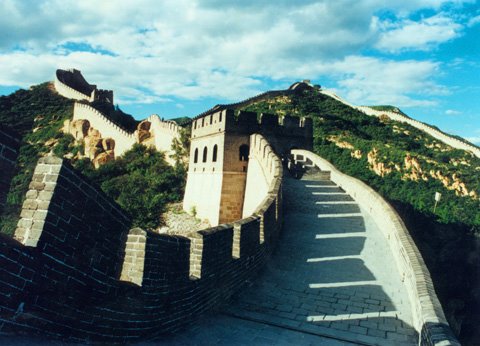
Beijing is the capital of the People's Republic of China. It is not only the nation's political centre, but also its cultural, scientific and educational heart and a key transportation hub. Beijing has served as a capital for more than 800 years. The city had many places of historic interest and scenic beauty, including the imperial Palace (also known as the Forbidden City), the largest and best-preserved ancient architectural complex in the world; the Temple of Heaven, where Ming and Qing emperors performed solemn rituals for bountiful harvests; the Summer Palace, the emperors' magnificent garden retreat; the Ming tombs, the stately and majestic mausoleums of 13 Ming Dynasty emperors; and the world-renowned and genuinely inspiring Badaling section of the Great Wall. Large-scale construction since the founding of the People's Republic of China in 1949 has brought great changes to Beijing. Today's Beijing still retains the alluring fascination of an ancient capital, but has added a small forest of skyscrapers and a complete range of municipal facilities, transforming itself into an attractively modern metropolis redolent of history.

The National Flag, National Emblem and National Anthem
The national flag of the People's Republic of China is red in color, rectangular in shape, with five stars. The proportion between the length and height of the flag is three to two. The five five-pointed yellow stars are located in the upper left corner. One of them, which is bigger, appears on the left, while the other four hem it in on the right.

The red color of the flag symbolizes revolution; the stars take on the yellow color in order to bring out their brightness on the red ground. The larger star represents the CPC, while the four smaller ones, the Chinese people. The relationship between the stars means the great unity of the Chinese people under
the leadership of the CPC.

The national emblem of the People's Republic of China is Tiananmen in the center illuminated by five stars and encircled by ears of grain and a cogwheel. The ears of grain, stars, Tiananmen and cogwheel are painted golden, and the inner part of the circle and hanging ribbons are painted red because these two colors are traditional Chinese colors representing auspiciousness and happiness. Tiananmen symbolizes the unyielding national spirit of the Chinese people in their fight against imperialism and feudalism; the ears of grain and cogwheel represent the working class and the peasantry; and the five stars stand for the
great unity of the Chinese people under the leadership of the CPC. The national anthem was created in 1935, the lyrics by Tian Han, a famous poet, and the music by Nie Er, a famous composer. The lyrics are as follows:
Arise, ye who refuse to be slaves;
With our very flesh and blood
Let us build our new Great Wall!
The peoples of China are in the most critical time,
Everybody must roar his defiance.
Arise! Arise! Arise!
Millions of hearts with one mind,
Brave the enemy's gunfire,
March on!
Brave the enemy's gunfire,
March on! March on! March on, on!

This song, originally named March of the Volunteers, is the theme song of the film, Young Heroes and Heroines in Stormy Years. The film describes the people who went to the front to fight against the invaders in the 1930s when Japan invaded northeast China and the fate of the Chinese nation was hanging in the balance.

March of the Volunteers, inspiring and forceful, expresses the determination of the Chinese people to sacrifice themselves for national liberation, and their fine tradition of bravery, firmness and unity in their fight against aggression. It was for this reason that the CPPCC on September 27, 1949 decided to adopt the song as the national anthem of the People's Republic of China, and the National People's Congress on December 4, 1982 officially decided to adopt the song as the national anthem of the People's Republic of China.

Saturday, September 30, 2006

China Transport Introduction

Since the founding of the PRC in 1949, China has formed a comprehensive transportation system comprehending railways, highways, civil aviation and water transport, and a posts and telecommunications network accessible from all directions. As the market economy system was established after the initiation of the policies of reform and opening to the outside world in 1978, historic changes took place in transport, posts and telecommunications-they have developed quickly and are heading for openness and competition, emerging from a closed and monopolistic state. By the end of 1999, the total length of transportation lines in China had reached 3.55 million km, 16.3 times and 2.88 times the lengths in 1949 and 1978, respectively; the total length of optical cable lines had reached 194,000 km from zero in 1978. In 1978, there were no mobile telecommunications in China; however, in 1999, the mobile phone users reached 43.24 million. Mobile telecommunications have developed to the extent of using analogue and digital networks, and realized automatic roaming with some countries and regions. Data telecommunications have grown from nothing to the stage of having an efficient network.

The level of technical equipment of transport, posts and telecommunications is continuously rising. By the end of 1999, the length of double-track railways had reached 20,935 km, with a double-track rate of 35.7 percent, a nearly 20 percentage points increase over 1978; and the length of electrified lines had reached 13,629 km, with an electrification rate of 23.4 percent, a 20.4 percentage points increase over 1978. Developing from nothing, the length of expressways has reached 9,083 km. The numbers of railway engines, civil vehicles, motor transport ships and airplanes have all doubled or redoubled. New berths at major harbors total 1,236, of which 347 are 10,000-ton-class berths, and the number of new civil airports is over 90. With the improvement of transport capacity and expansion of posts and telecommunications, transport, posts and telecommunications have developed by leaps and bounds. In 1999, the various transport means carried 4,023.5 billion tons/km of freight, and 1,125 billion persons/km-4.1 times and 65 times increases over 1978, respectively. The posts and telecommunications volume totaled 331.1 billion yuan, 109 times that of 1978 in constant prices.

Conversation Topics

Before your visit, it is worthwhile to know some aspects of Chinese culture, history, and geography, for your hosts will appreciate your initiative.

It is important, during the course of the conversation, to be aware of the speech culture in China. Negative replies are considered impolite in China. Never say "no". Instead, you can respond with "I'll look into that" , 'I'll think about it' or 'maybe' etc. You'll find that the Chinese will do the same. When your Chinese counterparts smilingly and politely or even enthusiastically say 'No big problem' or 'The problem is not serious', they usually mean 'There are still problems'.

If you are asked of intrusive questions concerning your age, income, and marital status and you don't want to tell, also you'd better remain polite and give an unspecific answer. Don't show anger to the questioner, since 'losing face' has such negative implications in this culture. Never inquire of your Chinese hosts' family except some questions like 'How old is your child?', 'How long have you been in the work force?' or 'Where is your child studying?' as a means of determining their marital status and age.

The question 'Have you eaten?' or 'Where have you been?' are mentioned in China as well as 'How are you?' in North America; it's just a superficial inquiry that does not require a literal-minded, detailed answer. Simply answer, 'yes', even if you haven't actually eaten or simply smile and say 'thank you'.

It is a good idea to make an effort to learn and use a few words in Chinese; your initiative will be noticed and appreciated. Make sure you know the meaning and appropriate occasions for what you say.

You can make general inquiries about the health of another's family, such as 'are all in your family well?' During a meal, expressing fond of the food you are eating is a welcome, and usually expected topic of conversation. 'Small talk' is considered especially important at the beginning of a meeting; any of the topics suggested in the next set of points will be appropriate for this occasion.

Popular Topics

Chinese scenery, landmarks

weather, climate, and geography in China

Chinese art, antique

food, shopping etc. in China

your travels in other countries

your positive experiences traveling in China

Topics to Avoid

Refrain from using the terms such as 'Red China', 'Mainland China,' and 'Communist China.' Just say 'China.'

Never say "the Republic of China"; instead, at meetings, say "Taiwan".

Chinese Medicine

Traditional Chinese Medicine

Today, medical care in China often consists of a mixture of both Western and traditional Chinese medicine although Western-style medicine tends to be dominant. Large public hospitals in cities across the country offer both of these approaches to medical treatment. The Chinese will usually visit a doctor trained in Western medicine if they feel that they are seriously ill and need to be treated quickly. If the problem is not too serious or urgent, the patient will most likely see a traditional doctor who can better restore harmony to the body.

Historical Roots

Traditional Chinese medicine, as practiced today and in past centuries, is based upon an array of theories and practices from both foreign and native sources. The history of Chinese medicine is said to go back as far as 5,000 years to the time of Shennong, a divine husbandman credited with the discovery of medicinal herbs.


According to Chinese legend, Shen Nung, the Chinese father of agriculture and leader of an ancient clan, took it upon himself to test, one by one, hundreds of different plants to discover their nutritional and medicinal properties. Many of these turned out to be poisonous to humans. Over the millennia, Chinese have used themselves as guinea pigs in this same way to continue testing plants for their properties of inducing cold(han), heat(jeh), warmth(wen), and coolness(liang). They classified the medicinal effects of the plants on the various parts of the body, then tested them to determine their toxicity, what dosages would be lethal and so forth.

Historical writer Liu Shu reported that " Shennong tasted hundreds of herbs himself; at times, as many as 70 poisonous herbs in one day”. The validity of that statement is surely one to be debated but Shennong Bencaojing (Shennong's Classic on material Medical) describes the medicinal effects of some 365 herbs and is the earliest known text of its kind. Another early text, which continues to be a cornerstone in the Chinese medical canon, is Huang Dineijing (The Yellow Emperor's Canon of Interior Medicine). While authorship is unknown, its present-day version is believed to have been compiled between second century BC and eighth century AD and later revised during the Song Dynasty (960 -1279). Over the centuries, volumes upon volumes of commentary have been written about this ancient text. Its influence remains important as the main principles of Chinese medicine are still based on theories first set forth by it.

The stem of Chinese ephedra is a sudorific but its roots, to the contrary, can check perspiration. Cassia bark is warming in nature and is useful in treating colds. Mint is cooling in nature and is used to relieve the symptoms of illness resulting from heat factors. This accumulation of experience strengthened the Chinese understanding of natural phenomena and increased the applications of natural principles in Chinese medicine. The same principles described in the preceding are also applied to assess the patient's living environment, his life rhythms, the foods he prefers or avoids, his personal relationships and his language and gestures as a tool in better understanding his illness and suggesting improvements in various areas. Once the excesses or imbalances are pinpointed, they can be adjusted and physical and mental health and balance restored. This attainment of equilibrium in the body's flow of energy is the ultimate guiding principle of Chinese medical treatment.

The theoretical framework of Chinese medicine was established more than two millennia ago. A great deal of ancient medical knowledge is preserved in the pre-Qin (221-207 BC) Inner Cannon (Nei Jing), a comprehensive record of Chinese medical theories up to that time. The Han dynasty (206 BC - 220 AD) produced an authoritative and valuable practical guide--even to present day--to the treatment of illness, the Treatise on Diseases Caused by Cold Factors (Shang Han Lun) by Zhang Chunjing.

One of the best-known Chinese medical works is the Materia Medica(Beng Cao Gang Mu), compiled in the Ming Dynasty (1368-1644 AD) by Li Shizhen. This encyclopedic work heralded a new era in the world history of pharmacology. It includes descriptions of 1,892 different kinds of medicines. These works have all been translated into several foreign languages and have exercised a profound influence on East Asian and European countries

The Chinese have a unique system of categorizing illnesses that is widely divergent from its Western counterpart. The philosophy behind Chinese medicine is that man lives between heaven and earth and comprises a miniature universe in himself. The material of which living things are made is considered to belong to the "yin" or female, passive, receding aspect of nature. The life functions of living things, on the other hand, are considered to belong to the "yang" or masculine, active, advancing aspect. The functions of living beings are described in terms of the following five centers of the body:

  • (1)"heart" or "mind" (xin)-- this refers to the "command center" of the body which manifests itself as consciousness and intelligence
  • (2) "lungs" or "respiratory system" (fei)--this system regulates various intrinsic functions of the body and maintains cybernetic balance
  • (3) "liver" (gan)--this term includes the limbs and trunk, the mechanism for emotional response to the external environment and the action of organs
  • (4) "spleen" (pi)--this organ system regulates the distribution of nutrition throughout the body and the metabolism, bringing strength and vigor to the physical body and
  • (5) "kidneys" (shen)--this refers to the system for regulating the storage of nutrition and the use of energy; the human life force depends on this system. This theory is used to describe the system of body functions and as a whole is referred to as the "latent phenomena".

Several main concepts are essential to understanding traditional Chinese medicine. Holism, or the concept that parts of a human body form an integral, connected, and inseparable whole, is one of the main distinguishing features of traditional Chinese medicine. Whereas Western medicine tends to treat symptoms in a direct fashion, traditional Chinese medicine examines illnesses in the context of a whole.

The passage of the seasons and changes in the weather can have an influence on the human body. Those having the most pronounced effect are wind (feng), cold (han), heat (shu), moisture (shih), dryness (tsao), and internal heat (huo "fire"). Excessive or extraordinary changes in the weather harm the body and are referred to as the "six external disease-causing factors" (liu yin). On the other hand, if mood changes within the individual, such as happiness(hsi), anger(nu), worry(yu), pensiveness(szu), grief(pei), fear(k'ung) and surprise(ching) are too extreme, they will also harm the health. These emotions are called the "seven emotions"(ch'i ch'ing). In Chinese medicine, the six external disease-causing factors interacting with the seven emotions form the theoretical foundation of disease pathology. These theoretical models, coupled with the "theory of latent phenomena," , are used to analyze the patient's constitution and his illness and diagnose the exact nature of his overall physical and psychological loss of balance. Based on this analysis, the doctor can prescribe a method to correct the imbalance. The object of Chinese medicine is the person, not just the illness. In Chinese medical thinking, illness is only one manifestation of an imbalance that exists in the entire person.

Yin-yang philosophy and the theory of five elements form a system of categories that explain the complete relationships between parts of the body and the environment. Yin and yang represent two opposite sides in nature such as hot and cold or light and dark. Each of the different organs is said to have yin or yang characteristics. Balance between the two is vital for maintaining health. The five elements--earth, fire, water, metal and wood-are categories of characteristics into which all known phenomena can be classified. For example, just as water subdues fire, phenomena associated with water are said to control those classified under fire.

Visiting the most famous Chinese pharmacy, the legendary Tongrentang is much like being inside a miniature museum of natural science. Tucked away in row after row of tidy drawers are animal, plant and mineral products, each with a particular purpose. Among the assortment of curiosities is amber--to relax the nerves; peach pits and safflower to improve blood circulation; Chinese ephedra (mahuang) to induce perspiration; and ginseng to strengthen cardiac function.

The filling of a prescription ordered by a Chinese doctor is a fascinating process to watch. The pharmacist selects a few particular ingredients from the hundreds on his shelf. These are taken home by the patient, boiled into a "soup" and drunk. Confronted with such a steaming brew, you might ask yourself just what the basis of this ancient medical art is.

A traditional Chinese pharmacy has a unique smell made up of thousands of scents emanating from jars and cabinets stocked full of dried plants, seeds, animal parts and minerals. Among them are the well-known ginseng roots, dried or immersed in alcohol and often looking like a human figure. In fact, the Chinese word for ginseng contains the character ren, which means person.

Tongrentang Pharmacy

Located in an old part of Beijing, south of Tian'anmen Square, in business for over 300 years, this pharmacy was once a royal dispensary during the Qing Dynasty and still produces all the pills and secret concoctions once used by royalty. The enormous size of this pharmacy is overwhelming, as is the selection of remedies--small and large eggs, snakes coiled in spirals, dried monkeys, toads, tortoises, centipedes, grasshoppers, small fish, stag antlers, rhinoceros horns and testicles. And then there are the thousand kinds of dried and preserved herbs, blossoms, roots, berries and fruits.

Acupuncture

In addition to the prescription of medicines, acupuncture is another frequently used tool of treatment in Chinese medicine. Its history antedates written Chinese language, but acupuncture was not fully developed until after the Han Dynasty. Its theoretical base is the adjustment of c'hi, or the flow of life energy. C'hi flows through the body via the system of "main and collateral channels"(ching luo) of the body. At certain points along these channels, acupuncture needles may be inserted or Chinese mugwort(ai ts'ao) burned in moxibustion, to adjust imbalances in the flow of c'hi and concentrate the body's self-healing powers in the points where needed. In 1980, the World Health Organization released a list of 43 types of pathologies which can be effectively treated with acupuncture. The use of acupuncture as anesthesia during surgery or for painless childbirth is no longer "news." Acupuncture is simple to administer, has few side effects and has broad applications. It has opened up a whole new "hot" field of scientific and medical research.

The increasing popularity of acupuncture outside of China has made it nearly synonymous for many Westerns with all traditional Chinese medicine. Not meant as a cure for everything, acupuncture has nonetheless enjoyed renewed interest in recent decades and is especially effective in controlling pain.

The practice of acupuncture is based on a theory of channels or meridians by which " influences" flow through the body. The flow of positive influences through the body is maintaining health. Unhealthy symptoms are in fact, manifestations of improper qi. The Huang Dineijing describes 365 sensitive points used in acupuncture, in addition to 12 main conduits in the human body. Executed properly, acupuncture should be relatively painless.

There is also a system of ear acupuncture, performed withou needles. Small, round seed kernels are stuck onto certain points of the ear and massaged by the patient every so often. This method is not only very successful in the treatment of pain, but is also said to relieve some allergies such as hay fever.

An acupuncture clinic often smells similar to a pharmacy. This is the typical smell of the moxa herb, or mugwort. It is considered especially helpful in the treatment of illnesses that, in Chinese medical terminology, are classified as a cold"; for example, stomach and digestive complaints without fever, certain rheumatic illnesses, chronic pains in the back and cramped shoulders and neck. The mugwort is formed into small cones and placed on slices of fresh ginger, then it is allowed to grow slowly. The plant is then placed onto the acupuncture point.

Chinese Qigong

On any early morning in China, millions of people, most of the old, gather in parks to exercise. There are several types of traditional exercise that are regarded not only as ways to take care of one's body, but also as therapy.

The most common type of exercise is taijiquan, the so-called shadow boxing. Another, perhaps less familiar to Westerners, is qigong, which is often translated as breathing therapy. The two main types of qigong are separated into" hard" and " soft". Soft qigong is more of a meditative type, mostly breathing exercises and fairly simple non-stressful movements. Hard qigong on the other hand, is more intense and is practiced to cultivate great strength, serious stamina and almost super-human abilities (supposedly).

A basic tenet of soft qigong is the concept of "holding the ball". This is a simple position which is seen in many different forms of qigong. The basic idea is that you picture a ball in front of you and you place your hands on either side of the ball so that you are holding it up.

The aim is to create a circuit of qi. Energy circulates throughout your body and by creating this circuit with your arms you can exercise the flow ball for a while your hands start to get warm. If you are doing it correctly, after a little while you should feel like the ball is expanding and contracting. You then move your hands farther apart, back in, then out again.

By going through the movements over and over, you condition your body while, at the same time, relaxing your mind. This, combined with movements specially formulated to increase qi flow (including lots of ball-holding), creates a veritable qi feast in your system.

Today, an estimated 70 million people in China practice qigong on a daily basis. The continued popularity of qigong represents a healthy interest in exercise.

TOURISM

Introduction

Modern tourism in China sprang up in the early 1950s. In 1954, the China International Travel Service was established, with 14 branches in Guangzhou, Shanghai, Beijing and other major cities. In 1964, the State Tourism Administration of China was formally established. Since the initiation of the policies of reform and opening to the outside world in 1978, China's tourism has entered a stage of rapid development. In 1999, the number of tourists entering China reached 72.8 million, of which 8.43 million were foreign tourists, 40 times the figure for 1978. Consequently, the foreign exchange income from this industry reached US$14.1 billion, 54 times that of 1978. Currently, China has become an important tourism destination in Asia, and the fifth large fourism country in the world. Domestic tourism is also growing vigorously. In 1999, the number of domestic tourists reached 719 million, spending a total of 283.2 billion yuan - 14.3 percent and 105.9 percent increases over 1995, respectively. With the improvement of the Chinese people's living standards, Chinese citizens have an increasingly strong interest in traveling abroad. In recent years, Chinese citizens have traveled to Southeast Asia and Europe. Foreign travel agencies are now opening offices in China to attract Chinese to travel abroad.

Now, China is fast on its way to becoming a country with developed tourism, and constantly improving tourism facilities and services. It is estimated that, by 2020, China will be the world's No.1 tourism destination and the fourth-largest nation of tourists.

Tourism Resources

China is a vast land, rich in tourism resources. It comes out in front in the world in scenic spots and historical sites, spectacular landscapes, and colorful and varied national customs. At present, there are two major tour routes in China: One is the "S"-shaped traditional tour route, containing famous political and cultural cities such as Beijing, Xi'an, Shanghai, Suzhou and Hangzhou; the other one is the crescent-shaped tour route containing coastal open regions, such as the Liaodong and Shandong peninsulas and the Yangtze and Pearl river deltas. Following the "S"-shaped tour route, tourists may climb the Badaling Great Wall and visit the Imperial Palace and Temple of Heaven in Beijing, and view the terracotta warriors and horses excavated from the Mausoleum of the First Qin Emperor, the Stele Forest and the Great Wild Goose Pagoda in Xi'an, wander along the bustling Bund and Nanjing Road and through the Pudong New Zone in Shanghai, enjoy Suzhou's gardens and the sights of the West Lake in Hangzhou. Following the crescent-shaped tour route, visitors may get some idea of the enormous changes which have taken place in the open coastal cities since the initiation of reform and opening to the outside world, and appreciate the charming seaside areas in north and south China. Moreover, the coastal towns all have holiday villages and various recreation facilities.

In 2000, China is sponsoring the "China Century Tour". The program consists of dozens of tourism celebrations and festivals, such as the Ice and Snow Festival, Lantern Festival, and Pingyao Ancient City Cultural Festival. Nine specially chosen tourism routes along the Yangtze River, Yellow River and Three Gorges are expected to attract more foreign tourists. Meanwhile, China is starting large-scale promotion activities in the domestic tourism market, so as to make the Chiense people get to know their own country's tourism resources better. During the China Century Tour activities, China is promoting "China's World Heritage - World-Level Tourist Attractions in the 21st Century" as China's competitive products in the international tourism market.

Friday, September 29, 2006

China Travel

Travel to China is a life time experience and a better way to understand China. Only when you are there, you may start to appreciate and understand what a difference to live in a nation with a population of 1.2 billion.

China offers variety choices for visitors. If you are interested in Chinese history, Chinese culture and Chinese scenery, your trip will be very fulfilled and very interesting. If you want to enjoy a peaceful sunshine beach holiday, there are plenty of tourist areas along the coastal line, which have unspoiled beaches and luxury hotels for visitors. In Hainan Island, the beautiful Sangya beaches are opened whole year around and there is no winter in this island. If you want excitements and nightlife, stay in big cities. There are many places every night for international gathering. If you are adventurers, go to remote areas to watch wild life or visit minorities to see how they live in the hillsides or desert. If you are sporty, take a cycle trip along the countryside, enjoy the rural life and meet with Chinese people along the route.

You may have heard or read a lot about China from books, newspapers, magazines and TV programs. Some of them are true but most of them are out of date, incorrect or even false. China is different from many of your previous experiences and may shock you in many ways. This is what China is!

This country is changing and progressing every day. Yet it is still a developing country. After the economic reform, most of the developments concentrate in major cities and remote areas are still very backward. China is a very populated nation and people have to cope with the crowded environment. Foreign visitors may not get use to the mentality of the people and sometimes become frustrated with the situation, which they never experienced before. Basically Chinese are reserve, peaceful and nice. They are very polite too but in their own way. When a foreigner is willing to take a more positive attitude to recognize the difference, the trip will become worthwhile or you may ruin your trip completely by unreasonable expectation and misjudgment of the people in general.

China Briefing

China is one of the biggest countries in the world. It has an area of about 9.6 million square kilometers which comprises about 6.5 per cent of the world total land area. Its population of more than one billion accounts for 23 per cent of the world's population. China is the world's oldest continuous civilization. World Travel Organization predicts that by year 2020, China will become the number one travel destination in the world.

China is situated in the eastern part of Asia on the west coast of the Pacific Ocean. It is the third largest country in the world (after Canada and Russia). The distance from east to west measures over 5,200 kilometers and from north to south, over 5,500 kilometers. When the sun shines brightly over the Wusuli River in the east, the Pamire Plateau in the west is in the very early morning. When blizzards wrap the north along the Heilongjiang River in the winter, spring sowing is underway on Hainan Island in the south.

China has a land border of 22,143.34 kilometers long and is bordered by twelve countries: Korea in the east; Russian in the northeast and the northwest; Mongolia in the north; India, Pakistan, Bhutan and Nepal in part of the west and southwest; Burma, Laos and Vietnam in the south.

Beside a vast land area, there are also extensive neighboring seas and numerous islands. The coastline extends more than 14,500 kilometers. Across the East China Sea to the east and South China Sea to the southeast are Japan, the Philippines, Malaysia, and Indonesia. More than 5,000 islands are scattered over China's vast territorial seas; the largest being Taiwan and the second largest, Hainan. One territorial sea and three neighboring seas altogether constitute 4.73 million square kilometers.

China Culture

Calligraphy has traditionally been regarded as China's highest form of visual art - to the point that a person's character was judged by the elegance of their handwriting! Decorative calligraphy is found all over China, in temples and adorning the walls of caves and the sides of mountains and monuments. The basic tools of calligraphy - brush and ink - are also the tools of Chinese painting, with linework and tone the all-important components.

Despite the ravages of time, war and ideology, there's still a lot to see architecturally. Traces of the past include the imperial structures of Beijing, the colonial buildings of Shanghai, the occasional rural village and Buddhist, Confucian and Taoist temples. Funerary art was already a feature of Chinese culture in Neolithic times (9000-6000 BC), ranging from ritual vessels and weapons to pottery figures, jade and sacrificial vessels made of bronze. Earthenware production is almost as ancient, with the world's first proto-porcelain being produced in China in the 6th century AD, reaching its artistic peak under the Song rulers.

China's language is officially Mandarin, as spoken in Beijing. The Chinese call it Putonghua. About 70% of the population speak Mandarin, but that's just the tip of the lingusitic iceberg. The country is awash with dialects, and dialects within dialects - and few of them are mutually intelligible. Of the seven major strains, Cantonese is the one most likely to be spoken in your local Chinese takeaway. It's the lingua franca of Guangdong, southern Guangxi, Hong Kong and (to an extent) Macau.

China's literary heritage is huge, but unfortunately its untranslatability makes much of it inaccessible to Western readers. Traditionally there are two forms, the classical (largely Confucian) and the vernacular (such as the prose epics of the Ming dynasty). Chinese theatre is also known as opera because of the important role played by music, and has spawned such diverse arts as acrobatics, martial arts and stylised dance. Many Western film-lovers are fans of Chinese cinema, with releases enjoying success at film festivals and art-house cinemas. Recently there has been an emergence of talented 'fifth-generation' post-Cultural Revolution directors, including Zhang Yimou (Red Sorghum, Chen Kaige (Farewell, My Concubine), Wu Ziniu and Tian Zhuangzhuang. Add to them Hong Kong's East-meets-West action directors John Woo (Hard Boiled) and Ringo Lam (Full Contact) and you have a full-fledged, extremely successful film industry.

Chinese cuisine is justifiably famous, memorably diverse - and generally not for the squeamish. The Chinese themselves like to say they'll eat anything with four legs except a table. For the most part, however, it's a case of doing ingenious things with a limited number of basic ingredients. The cuisine can be divided into four regional categories: Beijing/Mandarin and Shandong (with steamed bread and noodles as staples), Cantonese and Chaozhou (lightly cooked meats and vegetables), Shanghainese (the home of 'red cooking' and wuxi spare ribs) and Sichuan (spicy, with lots of chilli). Tea is the most common nonalcoholic beverage on sale, although Coca-Cola (both original and bogus) is making inroads, while beer is by far the most popular alcoholic drink. 'Wine' is a loose term which can cover oxidised and herb-soaked concoctions, rice wine and wine containing lizards, bees or pickled snakes. Another favourite is maotai, a spirit made from sorghum which smells like rubbing alcohol and makes a good substitute for petrol or paint thinner.

China Economy Overview

The size of the Chinese economy is likely to climb, in world rankings, from its current position as the sixth largest to the second largest by 2030, said economists with global investment bank Lehman Brothers.

With its gross domestic product (GDP) growing at an annual rate of 6 per cent, China will come in after the United States to secure the second place spot, the economists said.

Such an economy stands to offer exciting business and capital market opportunities to foreigners over the next 10 years or so, said Robert Subbaraman, a Lehman Brothers senior economist who is the co-author of a newly released comprehensive report on China's economic, political, social and foreign policy prospects over the next 10 years.

At a press conference last week in Beijing, Subbaraman and his colleagues offered detailed explanations of their forecasts regarding the impact of the country's accession to the World Trade Organization (WTO), growth opportunities and how to do business in China.

Tags