Showing posts with label Google Earth. Show all posts

Thursday, October 19, 2006

potala palace 布达拉宫


in 641, after marrying princess wencheng, songtsen gampo decided to build a grand palace to accommodate her and let his descendants remember the event. however, the original palace was destroyed due to a lightening strike and succeeding warfare during landama's reign. in seventeenth century under the reign of the fifth dalai lama, potala was rebuilt. the thirteenth dalai lama expanded it to today's scale. the monastery-like palace, reclining against and capping red hill, was the religious and political center of old tibet and the winter palace of dalai lamas. the palace is more than 117 meters (384 feet) in height and 360 (1180 feet) in width, occupying a building space of 90 thousand square meters. potala is composed of white palace and red palace. the former is for secular use while the later is for religious.

  the white palace consists of offices, dormitories, a buddhist official seminary and a printing house. from the east entrance of the palace, painted with images of four heavenly kings, a broad corridor upwards leads to deyang shar courtyard, which used to be where dalai lamas watched operas. around the large and open courtyard, there used to be a seminary and dormitories. west of the courtyard is the white palace. there are three ladder stairs reaching inside of it, however, the central one was reserved for only dalai lamas and central government magistrates dispatched to tibet. in the first hallway, there are huge murals describing the construction of potala palace and jokhang temple and the procession of princess wencheng reaching tibet. on the south wall, visitors will see an edict signed with the great fifth's handprint. the white palace mainly serves as the political headquarter and dalai lamas' living quarters. the west chamber of sunshine and the east chamber of sunshine lie as the roof of the white palace. they belonged to the thirteenth dalai lama and the fourteenth dalai lama respectively. beneath the east chamber of sunshine is the largest hall in the white palace, where dalai lamas ascended throne and ruled tibet.

  the red palace was constructed after the death of the fifth dalai lama. the center of the complicated red palace is the great west hall, which records the great fifth dalai lama's life by its fine murals. the scene of his visit to emperor shunzhi in beijing in 1652 is extraordinarily vivid. it also has finely carved columns and brackets. the hall has four additional chapels. the west chapel houses three gold stupas of the fifth, tenth and twelfth dalai lamas'. their mummified and perfumed bodies are well kept in those stupas. among the three, the fifth dalai lama's stupa is the biggest, which is made of sandalwood, wrapped in gold foil and decorated with thousands of diamonds, pearls, agates and others gems. the stupa, with a height of 14.86 meters (49 feet), spends more than 3,700 kilograms of gold. the north chapel contains statues of sakyamuni, dalai lamas and medicine buddha, and stupas of the eighth, ninth and eleventh dalai lamas. against the wall is tanjur (beijing edition), a most important tibetan buddhist sutra sent to the seventh dalai lama by emperor yongzheng. in the east chapel a two meters (6.5 feet) high statue of tsong khapa, the founder of gelugpa which is dalai lama's lineage, is enshrined and worshipped. in addition, about 70 famous adepts in tibetan buddhism surround him. the south chapel is where a silver statue of padmasambhava and 8 bronze statues of his reincarnations are enshrined. on the floor above, there is a gallery which has a collection of 698 murals, portraying buddhas, bodhisattvas, dalai lamas and great adepts and narrating jataka stories and significant tibetan historic events. west of the great west hall locates the thirteenth dalai lama's stupa hall. since he was regarded as great as the great fifth, people started to build his stupa after his death in the fall of 1933. taking three years, the stupa is comparable with the great fifth's stupa. it is 14 meters (46 feet) in height, coated with a ton (2200 pounds) of gold foils. in front of it is a mandala made of more than 200,000 pearls and other gems. murals in the hall tell important events in his life, including his visit with emperor guangxu. the highest hall of potala was built in 1690. it used to be the holy shrine of chinese emperors. dalai lamas would come here with his officials and high lamas to show their respects to the central government annually before.

  dharma cave and the saint's chapel are the only structures left which were built in seventh century. they both lie central of the red palace. dharma cave is said to be the place where king songtsen gampo proceeded his religious cultivation. inside the cave, statues of songtsen gampo, princess wencheng, princess tritsun and his chief ministers are enshrined. in the saint's chapel above dharma cave, chenrezi, tsong khapa, padmasambhava, the fifth, seventh, eighth and ninth dalai lamas are enshrined and worshipped. visitors may find a stone with a footprint that was believed left by the infant twelfth dalai lama.

  notes:

  1. potala palace 布达拉宫

  2. princess wencheng 文成公主

  3. songtsen gampo 松赞干布

  4. white palace 白宫

  5. red palace 红宫
Google Maps,Google Maps coordinate,Only show at Item-Page.


布达拉宫是一座融宫堡和寺院于一体的古建筑群,始建于公元七世纪四十年代松蕃王朝松赞干布时期,距今已有一千三百多年历史。它座落在西藏自治区首府拉萨市中心、古城西北约2公里的玛布山(红山)上,最高处海拔3767.19米,是世界上海拔最高的古代宫殿。

1961年国务院将布达拉宫列为全国重点文物保护单位。19XX年,布达拉宫被确认为世界文化遗产。

布达拉宫是西藏自治区内最完整最宏伟的一座古建筑。“布达拉”是普陀罗(普陀)的译音,意即菩萨住的宫殿,相传公元七世纪时,吐蕃赞普松赞干布与唐联姻,为迎娶文成公主而建成此宫,今尚存法王修法洞和观音佛堂两处早期建筑。现有建筑群为17世纪中叶五世达赖受清朝册封后开始兴建,并经过历代达赖不断扩建而成。1959年前,布达拉宫是五世达赖之后历代达赖喇嘛生活起居和从事政治活动的场所,是旧西藏政教合一的统治权力中心,从七世纪起,先后共有九个赞普 (藏王)和十位达赖在这里居住过。

布达拉宫由红山南麓奠基,缘山而上,依势迭砌,从平地直达山顶,几乎占了整座玛布山(红山)。布达拉宫高117米,东西长360米,外观13层,实为9层,面积约12万平方米,殿宇巍峨,金顶辉煌,共有佛堂、经堂、灵塔殿、习经室 15000多间(按西藏建筑计算办法以柱计算)。整个建筑系石木结构。用块块方石垒砌,高大宽敞的殿堂墙上绘有各种色彩鲜艳的壁画,室内陈设有几十万个用金、银、铜、玉和檀香木等雕铸的大小佛像,造型生动。集中体现了藏族人民高度的建筑成就和独特的艺术风格。

宫城占地41公顷,包括四大部分:红山之上的红宫、白宫、山后的龙王潭和山脚下的“雪”。其中红宫为历代达赖的灵塔殿和各类佛堂,位于整个建筑的中心和顶点,也是须弥佛土和宇宙中心的象征;白宫合抱于红宫外侧,是历代达赖的宫殿、大经堂、噶厦政府机构和僧官学校等,达赖的寝宫位于白宫最高处,又称日光殿;龙王潭为布达拉宫后园,方圆3公里,中为湖,湖中小岛上建有龙王宫和大象房等;“雪”在布达拉宫脚下,其中安置有噶厦政府的监狱、印经所、作坊、马厩,周围是宫墙和碉堡。站在红山脚下,可以看到布达拉宫的整体布局,由下到上分别是“雪”、白宫和红宫,充分体现了藏传佛教中“欲界”、“色界”、“无色界”的“三界说”,通过建筑布局艺术的对比、夸张和渲染,表现了佛法的神威,令人在千年之下,仍望之而生对天国佛境的凛遵之感……

布达拉宫是全国重点文物保护单位之一,红宫白宫内珍藏无数。一年四季开放。开放时间和当地企事业机关办公时间相同。每当藏历新年前一天会有跳神活动。

Tuesday, October 10, 2006

Guilin(桂林山水) - Amazing Landscape

Taking a trip into the hully karst landscape of Guilin at sunset is one of the most breath-taking site in China. Guilin by the banks of the Li River in southern China is justifiably considered to be one of the most beautiful in China. Today, Guilin attracts innumerable tourists because of its unique landscape. Until the end of the 1970s, it was a quiet, sleepy area. Since then, Guilin and the settlements along the Li River have undergone an incredible development through tourism. This town with over 400,000 inhabitants acquired its name from the Cassia trees, whose blooms carry their sweet scent through the whole town in autumn. Guilin literally means "Cassia Tree Forest". Guilin is said to be founded in 214 BC. At that time, the Lingqu Canal was built under the regency of the first Chinese emperor, Qin Sin Huangdi. It still connects the central Asian plain with southern China, and South-East Asia, via the Yangzi, the Lijiang and the Pearl river. Guilin and its surroundings are still mostly agricultural, but this is limited by the numerous mountains which pose a problem in the whole of Guangxi region. The landscape is characterised by terraced rice paddies, water buffalos, and bamboo groves, and peasants with turn up trousers and cone-shaped straw hats. Guilin is famous for it spicy Guilinjiang, a type of pepper sauce. From the Mountain of Coloured Layers, a 223 metre high mountain on the north, visitors can get a wonderful view of Guilin and Lijiang. The most beautiful tourist spot is the Crystal Palace of Dragon King, in the Reed Flute Cave at north west of the city centre and a subterranean water landscape, which resembles the landscape around Guilin and the Li River.
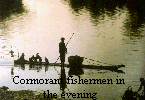
A boat trip on the peaceful Li River is the absolute high point of any visit to Guilin. A cruise from Guilin to Yangshuo, visitors will experience the winding and twisting Li River, goes past the many bizarre mountains whose shapes have inspired and fired the Chinese imagination, the Elephant Trunk Mountain, Old Man Mountain, Pagoda Mountain and Hole Mountain. Cormorant fishermen in narrow bamboo boats, bathing children, water buffaloes, small settlement and women doing their washing on the banks of the river can be seen along the way. Yangshuo, at the end of the boat journey is today a developed village that thrives mainly on tourism and seems to have nothing but tourist shops.

North-east of Guilin is Sanjiang, a settlement of the Song people. Changyong Bridge is an architecturally unique sight. South-west of Guilin, in the centre of the Autonomous region of Guangxi is Linzhou with 600,000 inhabitants, is an expanding industrial town, pricturesque and typically southern Chinese. The main attraction is the Dule Rock with its numerous karst caves. Another area with a beautiful landscape is the settlement of Guiping. The capital of the Autonomous Region of Guangxi is Nanning. It is located deep in the south and is only 160 km from the Vietnamese border. South-west of Nanning, near the Vietnamese border by the river Zuojiang, is a landscape as fantastic as that in Guilin. In Ningmeng county, visitors can see a 1,700 year old mysterious rock painting along a steep rock face by taking a boat on Zuojiang river.

Google Maps,Google Maps coordinate,Only show at Item-Page.


地理位置

1、地理位置:桂林是世界著名的风景旅游城市和历史文化名城,地处南岭山系西南部,广西壮族自治区东北部,109°45''-104°40'',北纬24°18''-25°41''。
  2、行政区划:辖秀峰,象山,七星,叠彩,雁山5城区和灵川,兴安,全州,临桂,阳朔,平乐,荔浦,龙胜,永福,恭城,资源,灌阳12个县,行政区域总面积27809平方公里。其中市区面积565平方公里。

  城市历史

  桂林历史悠久。根据市区宝积岩和甑皮岩洞穴发现的遗物,经考证,甑皮岩人已进入母系氏族社会阶段,距今约一万年。
  夏商周时期,这里是“百越”人的居住地。秦始皇置桂林,象,南海三郡,这是“桂林”名称的最早起源,但郡治不在今天的桂林市。汉元鼎六年(公元前111年),在这里设始安县,隶属荆州零陵郡。东汉时改属始安侯国。三国时先属蜀,后归吴。甘露元年(265年),置始安郡始安县,郡县治所都在今之桂林。隋唐时属岭南桂州总管府。唐武德四年(621年),李靖修城于独秀峰南。贞观八年(634年)改名临桂县,属桂州始安郡。光化三年(900年)始,属静江节度。五代十国时先后属楚和南汉的桂州。宋时,前属广南西路桂州,后属静江府。元时属广西行中书省静江路。明清时均属广西省桂林府。民国时属广西省。1914年改名桂林县,1940年始设桂林市。1944年11月至1945年7月28日,为日寇占领。光复后仍为广西省辖市。历史上长期为广西省会。   1949年11月22日桂林解放,为广西省辖市,1958年改称广西壮族自治区桂林市,辖桂林城区和郊区。
  1981年7月、1983年10月阳朔、临桂划归桂林市管辖。
  1996年12月26日桂林市委,市人民政府按国务院,自治区批复的方案,实行区划调整,将郊区更名为雁山区。
  1998年9月8日经国务院批准,桂林市和桂林地区合并,组建新的桂林市。More

Saturday, October 07, 2006

Tian'anmen(天安门)-the Gate of China, Beijing

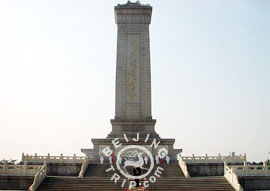
With a total area of 440,000 square meters, Tiananmen Square is the largest square in the center of Beijing. For over a hundred years, many ceremony and demonstrations have been held here. The grandeur of Tiananmen Gate (Heavenly Peace Gate) is a national symbol, with the Great Hall of the People on the western side and the Museum of the Chinese Revolution and the Museum of Chinese History to its east and west. The Monument to the People's Heroes - the 36 meters obelisk, made of Qingdao granite, dominates the center of the square. The Chairman Mao Memorial Hall and the Qianmen gate, sit in the south.

Tian'anmen Gate

A stone lion in front of the Tian'anmen TowerTian'anmen Gate (Gate of Heavenly Peace) was built in the 15th Century and restored in the 17th Century. From imperial days, the yellow glaze-tiled double-eaves tower functioned as a rostrum for proclamations to the assembled masses. October 1, 1949, Chairman Mao Zedong proclaimed the founding of the new China. The tower has five doors and in front of it are seven bridges spanning a stream. Only the emperor could use the central door and bridge. On the top of the central door is a gigantic portrait of Chairman Mao with slogans on each side stating 'Long Live the People's Republic of China' and 'Long Live the Unity of the Peoples of the World'. Walking through the gate, you can enter the imperial city - Forbidden City with free charge while a panoramic view from the tower costs 15RMB for Foreigners.
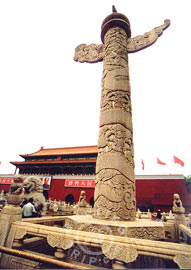
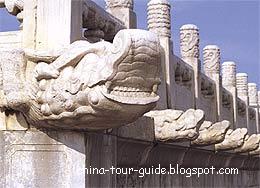
Obelisk marble columns engraved with entwisting dragons and clouds - an ornamental architecture called Huabiao in front of the Tian'anmen
Huabiao

Right beside a pair of marble lions in front of the Tian'anmen Gate stand obelisk of marble engraved with entwisting dragons and clouds - an ornamental architecture called Huabiao. Its history can be traced back to the Yao and Shun, legendary kings in remote antiquity. To solicit public criticism, it is said that wooden crosses were erected at marketplaces for people to write down complaints. Later during the Han (206 B.C. -- 220 A.D.) wooden posts were replaced by stone pillars, which gradually became the sumptuous columns to palace gates. Huabiao can be usually found in imperial gardens and mausoleums.

On the top is a plate-shape flat called Chenglupan (dew-collecting) on which squats an animal called kong (a legendary animal for watch-keeping) facing to the south. They were called "Wangjungui" or "looking forward to the emperor's return," who watched over the emperor's excursions and called him back. The couple inside the gate facing north, called Wangjunchu or "looking forward to the emperor's progress," were considered to supervise the emperor's behavior in the court when he neglect court affairs.

Great Hall of the People

Great Hall of the People, in Tian'anmen SquareThis is the venue of the legislature, the National People's Congress. Summit meetings are often held in the 10,000-seat auditorium with the familiar red star embedded in a galaxy of lights in the ceiling. Also you can visit the 5000 seat banquet room where US president Richard Nixon dined in 1972. The admission costs £¤ 15.
Monument to the People's Heroes (Renmin Yingxiong Jinianbei)

Built in 1958 on the southern side of Tian'anmen Square, this 36-meter obelisk bears brass-relief carvings of key revolutionary events such as the Chinese destroying opium in the 19th century.

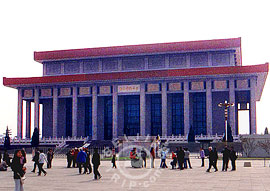
Mao Zedong Memorial Hall (Mao Zhuxi Jiniantang)

Behind the Monument to the People's Heroes is the hall where the embalmed body of Chairman Mao is kept and many Chinese show deep respect when confronted with the physical presence of Mao. more

Opening: 9:00 - 16:30


Google Maps,Google Maps coordinate,Only show at Item-Page.


位于北京城的中轴线上的天安门,始建于明永乐十五年(14l7年)。原名承天门,以示皇帝“承天启运,受命于天”。清顺治八年(1651年)重建后,改称天安门.既包含了皇帝是替天行使权力。理应万世至尊的意旨;又寓有“外安内和,长治久安”的含义。明、清时,天安门是皇城的正门,城门五阙,重楼九楹,高为33.87米;1970年翻建后高达34. 7米。它造型典雅,是我国传统建筑艺术的代表作。

天安门的主体建筑分为上下两层。上层是重檐歇山式,黄琉璃瓦顶的巍峨城楼,东西面阔九楹,南北进深五间,取“九五”之数,象征皇帝的尊严。正面有36扇菱花格式的门窗。城搂基座周围有汉白玉栏杆、栏板,雕刻着莲花宝瓶图案。城楼内所用木材大部分是楠木,60根红漆巨柱排列整齐,柱顶上有藻井与梁枋,绘着金龙吉祥彩画和团龙图案。地面铺的全是金砖,面积约2000平方米。屋顶的正脊与垂脊上装饰着螭吻、仙人、走兽。下层是高13米的朱红色城台,四周环绕琉璃瓦封顶的矮墙,下部是1.59米高的雕刻精美的汉白玉须弥座台基。城台的总面积达4800平方米,东西两侧各有一条长达百级供上下城楼用的梯道,俗称马道。还有5个拱形门洞,中间的门洞最大,高8.82米,宽5.25米,唯有皇帝可以进出。城楼前有外金水河,河上飞架7座汉白玉雕栏石桥,中间一座最宽阔的称“御路桥”。专为皇帝而设;御路桥两旁有宗室亲王过往的“王公桥”;王公桥左右的“品级桥”是供三品以上的官员行走的;四品以下的官员和兵弁、夫役只能走“公生桥”。公生桥架在太庙(劳动人民文化宫)和社稷坛(中山公园)门前。5座内金水桥除有类似严格的等级规定外,还表示“万方来朝”之意。金水河两岸有两对威风凛凛的石狮及两座连同须弥座高为9.57米的华表。石狮系明代永乐年间原物,距今已有500多年。石狮后面两边设有红色观礼台,台前东西各筑花坛,游人们常在这里驻足观景。华表上满刻着盘龙与云朵,巨柱顶端加上了云板、承露盘并蹲坐着石兽,此兽有注视皇帝出入之意,因而人们把前华表上两只背北面南的石兽叫“望君归”;把后华表上两只背南面北的石兽称“望君出”。

天安门在明、清两朝是皇帝颁发诏令之地。遇有新皇帝登基、大婚等重大庆典活动和皇帝父母进宫,都要启用天安门。皇帝平时一般不走天安门。只有每年去祭天、祭地、祭五谷时,才由此门出入。另外,皇帝御驾亲征或大将出征,都得在天安门前祭路、祭旗,以求马到成功,凯旋归来,同时显示威风。天安门还是“金殿传胪”的场所。每逢殿试后的两天,皇帝召见、传呼新中进士们的姓名,这叫“传胪”。考中前三名的状元、榜眼、探花插上金花,身披红绸,骑马游街,以谢皇恩。天安门唯独皇帝可以出入,而且只能出入喜事,绝对禁止出入丧事。

天安门是中华人民共和国举行开国大典的主会场,也是国徽图案的重要组成部分。它是我们伟大祖国的象征,已成为人们喜爱的观瞻胜地。more

The Forbidden City(故宫),Beijing

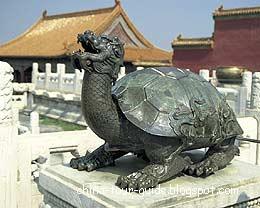
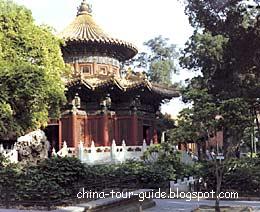
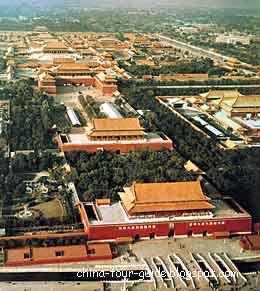
   The Forbidden City (Imperial Palace) in the heart of Beijing is the largest and most complete imperial palace and ancient building complex in China, and the world at large. Its construction began in 1406 and was completed 14 years later, having a history so far of some 580 years. Twenty-four emperors from the Ming and Qing (1644-1911) dynasties lived and ruled China from there. Most of the buildings in the Forbidden City were rebuilt many times, although they maintained the original architectural style.
  
   The Forbidden City, extending 753 meters from east to west, and 961 meters from north to south, makes a rectangular shape and covers a total area of 720,000 square meters. It consists of several dozen compounds of varying sizes and some 9,900 bays of rooms, with a total floor area of 150,000 square meters. Most of the buildings were built with wood, roofed with yellow glazed tiles and built on blue-and-white stone foundations, looking solemn and brilliant. City walls were 10 meters high, and a 52 meter-wide moat surround the Forbidden City. Three-storied towers are placed at each corner of the wall.
  
   The building arrangement within the Forbidden City is symmetrical. The Hall of Supreme Harmony, the Hall of Central Harmony and the Hall of Preserving Harmony, which comprise the outer palace, and the Hall of Heavenly Purity, the Hall of Union and the Hall of Earthly Tranquility, comprising the inner palace, stand in a line from south to north on the central axis. The 8 km central axis

runs through the
entire old Beijing
city to Yongdingmen in the south and
Zhonggulou in the north. The throne symbolizing imperial power is> positioned at the center of this
central axis.
  
   The buildings of the Forbidden City fully embody the artistic features and style of ancient Chinese palace architecture, and can be called a masterpiece in Chin
ese, even world, arch itectural history. Today, as the largest museum of cultural relics in China, the Forbidden City, also called the Palace Museum, collected and displayed some one million precious hist orical relics from the Shang Dynasty (16th century -771 BC) through to the Qing Dynasty. It was made part of the world cultural heritage list in 1987. more

Office of the Palace Museum Tel: 86-10-85117049
Google Maps,Google Maps coordinate,Only show at Item-Page.


故宫又称“紫禁城”,是明清两代的皇宫,也是世界上最大的宫殿,占地72万平方 米(长 960米,宽750米),建筑面积15万平方米,始建于公元1406,1420年建成,是明朝第皇帝朱棣始建,设计者蒯祥(1397—1481年,字廷瑞,苏州人),占地面积78万平方米,用30万民工,共建了14年,有房屋9999间半
,主要建筑是太和殿、中和殿和保和殿,保和殿也是科举考试举行殿试的地方,科举考试的一至三名分别称状元、榜眼、探花。

  故宫严格地按《周礼·考工记》中“前朝后市,左祖右社”的帝都营建原则建造,其前半部分为外廷,是皇帝朝政场所。建筑庄严、宏伟,特别是太和殿、中和殿和保和殿三大殿,建筑在8米高的三层汉白玉石阶上,以显示封建帝王至高无上的威严,太和殿座落在紫禁城对角线的中心,故宫的设计者认为,不这样不足以显示皇帝的威严,不足以震摄天下。

  现在我们参观时都为故宫的宏大而叹服,这一点在参观三大殿时感觉最明显,故宫是目前世界上最大的宫殿。

  午门是紫禁城的正门。东西北三面以12米高的城台相连,环抱一个方形广场。当中的正门平时只有皇帝才可以出入,皇帝大婚时皇后可以进一次,殿试考中状元、榜眼、探花的三人可以从此门走出一次。文武大臣按文东武西由两侧门出入。

  故宫参观的重点(必看):
  1、故宫中路外庭的三大殿(太和殿、中和殿、保和殿)、内庭三大殿(总长近一公里,走下来1个半小时);
  2、故宫西路(主要是养心殿,位于西路南端,从雍正开始清代8个皇帝在此居住,参观半小时);
  3、珍宝馆(在外东路,收藏有大量的故宫珍宝,票价10元,下午3点半停止售票,细看要3小时)more

Friday, October 06, 2006

HuangShan(黄山) Anhui

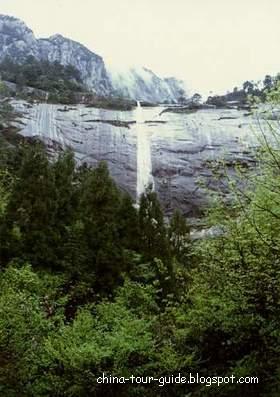
Huangshan Mountain in east China's Anhui province is one of Chinas ten best-known scenic spots, It is characterized by the four wonders, namely, odd-shaped pines, grotesque rock formation, seas of clouds and crystal-clear hot springs. Mount Huangshan is celebrated for having all the features of mountain scenery. Known as the No. 1 Mountain Under heaven, it features numerous imposing peaks(77 exceed an altitude of 1,000m), forests of stone pillars and evergreen sturdy pines; other features include grotesquely-shaped rocks (many of which are individually named, such as "pig-headed monk eating water melon"), waterfalls, pools and hot springs. Because of its mists and clouds, natural scenery in the area changes beyond prediction. Xu Xiake, a noted Chinese geologist and traveler in Ming Dynasty, praised Huangshan Mountain as the best of all mountains.

Mount Huangshan was listed as one of the World Natural and Cultural Heritages in 1990.

Mount Huangshan extends 40 kilometers from south to north and 30 kilometers from east to west, covering an area of 1200 square kilometers, the highlights of which occupy 154 square kilometers.
Huangshan Mountain is a marvel: within an area of 154 square kilometers there is a crowd of peaks, 72 of which have names indicating the shapes they resemble. Lotus, Brightness Top and Celestial Capital are the three major ones, all rising above 1,800 meters above sea level. The mountains are a body of granite, often with vertical joints. Erosion and fracture contributed to shape the rocks into huge columns, giving rise to lofty peaks and deep ravines. When it is cloudy the pinnacles loom in mists as if they were illusionary, while the sun is shining they unfold in all their majesty and splendor. Huangshan Mountain change its color and appearance with the alternation of seasons. In spring blooming flowers decorate the slopes in a riot of color and fill the valleys with fragrance; in summer you see verdure peaks rising one upon another and hear springs gurgling merrily. Autumn dresses the mountains in red and purple as maples and some other trees are blazing-red; winter turns them into a world of frost and ice with silver boughs and rocks everywhere. Here in Huangshan, pines and rocks are intimately involved with each other, almost every rock has a pine tree growing out of the crevice, and every tree has tortuous and gnarled roots and branches.The still sea of snow-white cloud can suddenly begin to roll and toss, rise or fall, gather or disperse while the peaks emerge and disappear in the clouds like isles in the ocean. So from ancient times it has been frequented by tourists seeking their mystery and admiring their frequented by tourists seeking their mystery and admiring their scenery. They come to the conclusion that the fantastic pines, the grotesque rocks, the sea of clouds and the hot springs are the four major attractions of the Yellow Mountains. As a matter of fact there are marvels almost everywhere, especially in the following scenic areas: Wenquan (Hot Spring), Yupinglou (Jade Screen Tower), Xihai ( West Sea), Beihai (North Sea), Yungusi (Cloud Valley Temple) and Songgu'an (Pine Valley Nunnery).

There is plentiful rainfall in Huangshan Mountain. Therefore there are thick forests.Owing to the peculiar terrain, the Huangshan Mountain's climate is marked by a vertical change, and the vertical distribution of vegetation is also distinctive: plants on the summit, on the middle levels and at the foot belong to the frigid, temperate and subtropical zones respectively. There are more than 1500 species of plants, of which trees comprise one third. So the Huangshan Mountain occupy an important place in China's botanical research. Here you will find century-old pines, firs, ginkgoes, actinidia, Chinese torreyas and camphor woods, remnants of the glacial era. A number of trees are celebrated on account of their age, grotesque shape, or precipitously perched position. Mount Huangshan abound in flowering plants; many of them are rare ones, such as Huangshan Rhododendron, magnolia as well as azalea, camellia, plum, lily, orchid, and so on. It has a rich store of medicinal herbs; more than 300 kinds are found here; the notable ones being glossy ganoderma ginseng, Chinese gold thread rhizome and Chinese cinnamon. Maofeng tea of Huangshan is well known at home and abroad.

Huangshan Mountains also provide the natural habitat for a wide variety of fauna. Among the animals there are monkeys, goats, deer, pangolin and squirrels. There are rare birds such as the red-billed leiothrix, the silver pheasant, the octave-tone bird and the oriole, all good singers. The red-billed leiothrix (called "love birds" in Chinese) are so lovely that they have become favorites of foreign tourists and are exported by pairs. Besides, chukkar(stone frog) from the streams is good to make delicious dishes with.

Mt. Huangshan's climate is mild and humid, neither too hot in summer nor too cold in winter, the temperature is agreeable all the year round .
It is cool in summer, averaging 70 °F at the North Sea Area ( 1 ,630 meters above sea) and 80 °F at Hot Spring Area (630 meters above sea) in July (the hottest month). As clouds often shut out the sun, hot weather never stays long, and this makes Yellow Mountains an ideal summer resort.
Mt.Huangshan lies in subtropical zones, so it's not quiet cold in winter, at least, not so cold as some people expected. The temperature ranges from 25 °F to 40 °F, but it's enough to result in a fantastic snow scenery and a silver world with pines and precipitous peaks covered with snow and decorated with icicles

Today Mt. Huangshan has become a world-famous tourist attraction. With its convenient facilities: three cable lines, four three-star hotels on the top, all the paths paved with flat stones, it lures millions of visitors both from home and abroad. Seeing is believing. Welcome to Mount Huangshan. More


add:Google Maps,Google Maps coordinate

黄山雄距于风景秀丽的皖南山区,它以“三奇四绝”的奇异风采名冠于世。1982年黄山被国务院列为首批国家级重点风景名胜区,1986年经评选列入中国十大风景名胜区,1990年被联合国教科文组织列入“世界遗产”名录。此后,黄山又相继被评选为国家级“卫生山”、“安全山”,1998年被建设部、国家旅游局等部门确定为全国首批十个文明景区之首。

  黄山,古称黟山,唐天宝六年(公元747年)依轩辕黄帝曾在黄山炼丹羽化升天的传说,唐明皇敕改黟山为黄山。它地跨市内歙县、休宁、黟县和黄山区、徽州区,面积1200平方公里,现划入黄山风景区的154平方公里,是号称“五百里黄山”的精华部分。

  黄山是以自然景观为特色的山岳旅游风景区,奇松、怪石、云海、温泉素称黄山“四绝”,令海内外游人叹为观止。黄山有名可数的72峰,或崔嵬雄浑,或峻峭秀丽,布局错落有致,天然巧成。天都峰、莲花峰、光明顶是黄山的三大主峰,海拔高度皆在一千八百米以上,并以三大主峰为中心向四周铺展,跌落为深壑幽谷,隆起成峰峦峭壁,呈现出典型的峰林地貌。

  登上一千八百多米的高处纵览,山中奇峰汇聚,峭壁千仞,拔地擎天,峥嵘崔嵬。青松在悬崖上争奇,怪石在奇峰上斗艳,烟云在峰壑中弥漫,霞彩在岩壁上流光,自然的美在这里汇聚,在这里升华,赋予它超凡脱俗的品质,塑造出它威武雄壮的气概。在黄山的面前,时空变得狭小,沧桑变得平淡,它是大自然的骄子,独领天下奇山的风骚。故而当之无愧地赢得“登黄山天下无山,观止矣”(徐霞客语)的崇高赞誉。More

Tags